nīrājana
A Journal of Arts & Ideas
Vikaṭanitambā
A portrait of a seventh-century Kashmiri poetess whose name may have been either mockery or armor. She was a scholar, a wit, and the author of some of Sanskrit literature’s sharpest and most tender verses on love and misfortune.

Written by
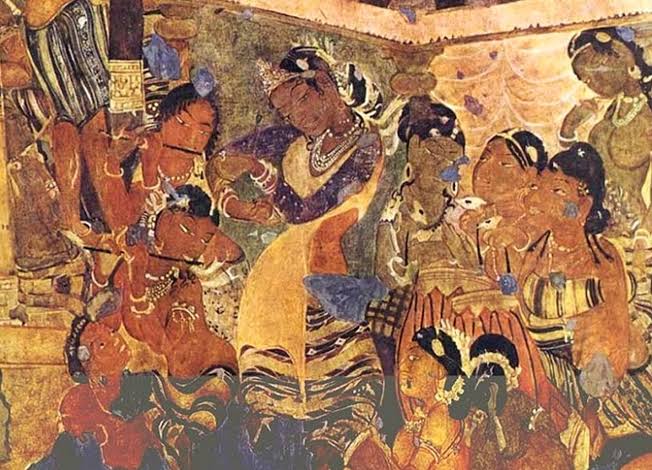
We do not know her real name. The name we do know is Vikaṭanitambā. What kind of name is this? Was it a term of endearment? Or a title bestowed by the women of her time in admiration of her beauty? Or did some rogue mock her (some scholars point out that vikaṭa can mean grotesque or ugly), and out of sheer defiance, she adopted it as her own name? We do not know. Some opine that this was the name of a heroine in a play staged during that era. (Ref. A.K. Warder, Indian Kavya Literature III, p. 255).
Whatever her name might have been, she was a poetess brimming with a distinct, extraordinary personality. It is surmised that she lived in the Kashmir region during the 7th century. She was an expert in many disciplines. She reportedly studied logic (tarka) and grammar (vyākaraṇa) under a guru named Govindaswami. There was absolutely no shortage of sharp wit and boldness in this golden soul. The life she endured was partly the reason for this. Who doesn’t face hardships? But that is not why we should study her. She is a dhīrā (a courageous, resolute woman). A great poetess (mahākavayitrī). No matter the circumstances, she never abandoned the aesthetic enjoyment of life (rasāsvādana), treating it like a spiritual practice, and left behind sweet, beautiful literature for us. She sculpted her very life experiences into literary works (kṛtis). That is exactly why great poets and rhetoricians like Rudrata, Vamana, Bhoja, Ruyyaka, Jalhana, and Rajasekhara hoisted her poetry onto their shoulders and paraded it in celebration. By quoting her shlokas in their treatises, they enriched and validated their own rhetorical propositions.
Rajasekhara praised her in this manner:
kē vaikaṭanitambēna girāṃ gumphēna rañjitāḥ
nindanti nijakāntānāṃ na maugdhya madhuraṃ vacaḥ
“Captivated by the weaving of Vikaṭanitambā’s words, who wouldn’t reproach the sweet, innocent chatter of their own wives?” (Meaning: Her poetry is so beautiful that it makes men complain that their own wives cannot speak as sweetly!)
It is unknown whether Vikaṭanitambā authored any full-length epics. We only have about ten or so shlokas available under her name today. While some are stray verses (cāṭuvulu), the majority are centered on romance and passion (śṛṅgāra). Just as Rajasekhara noted, her weaving of words (pada-gumphana) is wondrous. She filled herself to the brim with all the sweet qualities required for great literature—grace (lalita), subtlety and hidden meaning (narmagarbha), and pleasant clarity (prasanna).
First, look at this shloka:
अनालोच्य प्रेम्णः परिणतिमनादृत्य सुहृद-
स्त्वयाकाण्डे मानः किमिति सरले प्रेयसि कृतः ।
समाकृष्टा-ह्येते प्रलयदहनोद्भासुर-शिखाः
स्वहस्तेनाङ्गारास्तदलमधुनाऽरण्यरुदितैः ॥
anālōcya prēmṇaḥ pariṇatimanādṛtya suhṛda-
stvayākāṇḍē mānaḥ kimiti śaralē prēyasi kṛtaḥ
samākṛṣṭāhyētē virahadahanōdbhāsura-śikhāḥ
svahastēnā’ṅgārāḥ tadalamadhunā’raṇyaruditaiḥ
“Without considering the culmination of love, and without even respecting/consulting us, your friends, for what reason did you display such sudden anger and pride (māna) toward your lover? With your own hands, you have gathered the glowing embers of the blazing fire of separation. So, enough now with these cries in the wilderness.” (What is the use of crying now?)
These are the words spoken by a woman to her friend. That friend, without thinking things through, fought with her lover and severed their bond. Later, realizing her mistake, she weeps before her friends.
I do not know if earlier poets ever made such a description. It has an entirely fresh coating of originality. It is a shloka that perfectly captures the unstable mind of a woman who firmly makes a hasty decision without thinking ahead, only to suffer deeply afterward.
अन्यासु तावदुपमर्दसहासु भृङ्ग
लोलं विनोदय मनः सुमनोलतासु।
बालामजातरजसं कलिकामकाले
व्यर्थं कदर्थयसि किं नवमल्लिकायाः॥
anyāsu tāvadupamardasahāsu bhṛṅga!
lōlaṃ vinōdaya manaḥ sumanōlatāsu
bālāmajātarajasaṃ kalikāmakālē
vyarthaṃ kadarthayasi kiṃ navamallikāyāḥ
Rhetoricians crowned this shloka in their texts as the ultimate example of the figure of speech known as Prastutālaṅkāra. If describing one contextual action happening in front of you suggests another contextual action happening in front of you, it is Prastutālaṅkāra. Here, a woman strolling in a garden notices her lover, who has left her, eyeing other women. How is she to tell him that this act is dangerous and unwanted? If poetry exists as a refined culture (saṃskāra) in the mind, every element in nature submits to our expression. Right at that moment, a bee is trying to land on a screw-pine (mogali / kētakī) flower. Addressing the bee, the heroine says:
“O bee! Why don’t you delight your restless mind among those flowering creepers bursting with nectar, which are fully capable of bearing your forceful union? Instead, why do you pointlessly torment this tender, unseasonable jasmine bud (navamallikā) which has no pollen yet?”
What sheer genius one must possess to compose such an allegory!
Here is another shloka in a similar vein:
अपसर मधुकर दूरं
परिमलबहुलेऽपि केतकीकुसुमे।
इह नहि मधुलवलेशो
भवति परं धूलिधूसरं वदनम्॥
apasara! madhukara! dūraṃ
parimalabahulē’pi kētakī kusumē
iha na hi madhulavalēśō
bhavati paraṃ dhūli dhūsaraṃ vadanam
“Move far away, O bee! Even though this kētakī (screw-pine) flower spreads abundant fragrance, you will not find even a tiny drop of nectar in it; instead, only a face covered in dusty grey pollen will greet you.”
It is an Āryāgīti swaying with captivating lyrical grace (pada-lālitya).
Now, let us return to her life. It is said she lost her first husband and had to marry a second time. We cannot say for certain today whether the second marriage actually happened, but the man who became her husband was an uneducated fool (daddamma). Women of that era gave immense importance to education and personality. We all know the story of Kalidasa’s wife, who questioned him right to his face with “asti kaścid vāgviśēṣaḥ?” (Is there any special merit in your speech?). Vikaṭanitambā faced a similarly bizarre and difficult situation. Look at the shloka she composed extempore (āśuvu) then:
काले माषं सस्ये मासं
वदति शकासं यस्य सकाशम् ।
उष्ट्रे लुम्पति रं वा षं वा
तस्मै दत्ता विकटनितम्बा ॥
kālē māṣaṃ sasyē māsam
vadati śakāsaṃ yasya sakāśam
uṣṭrē lumpati raṃ vā ṣaṃ vā
tasmai dattā vikaṭanitambā
When he is supposed to say ‘māsa’ (month), he says ‘māṣa’ (black gram). When he is supposed to say ‘māṣa’, he says ‘māsa’. Instead of ‘sakāśam’ (proximity), he says ‘śakāsam’. If asked to say ‘uṣṭra’ (camel), sometimes he drops the ‘r’ consonant and says “uṣṭa”, and other times he drops the ‘ṣ’ and says “uṭra”. To such a man has Vikaṭanitambā been given!
Yielding to these circumstances, when her father was weeping for her fate, she comforted him with this shloka:
तात बाहट मा रोदीरेषा वै कर्मणो गतिः ।
दुषि धातोरिवास्माकं गुणो दोषाय क्ल्प्यते ॥
tāta! bāhaṭa mā rōdīḥ
ēṣā vai karmaṇō gatiḥ
‘duṣi’ dhātōrivāsmākaṃ
guṇō dōṣāya kalpyatē
“Father! Do not weep aloud. This is simply the course of karma. Just as with the verbal root ‘duṣ’, for us too, our virtue (guṇa) becomes the cause for a flaw (dōṣa).”
In this shloka, there is pain; surpassing the pain is a sharp wit; surpassing the wit is poetry; surpassing the poetry is erudition; and surpassing them all is profound inner strength (ātmabalaṃ). She employs a brilliant pun (ślēṣa) on the word guṇa, meaning both ‘virtue/good quality’ and the grammatical rule of ‘guṇa sandhi’. This poetess beautifully poeticized the Sanskrit grammatical rule that when the root ‘duṣ’ undergoes guṇa sandhi, it results in the word ‘dōṣa’ (flaw/fault).
Let us step out of her hardships, just as she did. Look at this shloka. There isn’t a single student of rhetoric (alaṅkāra) who hasn’t read it:
क्व प्रस्थितासि करभोरु घने निशीथे
प्राणाधिको वसति यत्र जनः प्रियो मे ।
एकाकिनी वद कथं न बिभेषि बाले
नन्वस्ति पुङ्खितशरो मदनस्सहायः ॥
kva prasthitā’si karabhōru ghanē niśīthē
prāṇādhikō vasati yatra manaḥ priyō mē
ēkākinī vada kathaṃ na bibhēṣi bālē?
nanvasti puṃkhitaśarō madanassahāyaḥ
A person is questioning a girl walking alone in the dark. The questioner is not innocent at all. Hence the highly suggestive address, karabhōru! (O woman with thighs as beautiful as an elephant’s trunk!).
“Where are you heading out in the thick of the night?” (Are you alone?)
“I am going to where my lover, who is dearer to me than my own life, resides.” (No, I already have a lover.)
“Tell me, going all alone, aren’t you afraid, O young girl?” (Shall I come along to accompany you?)
“What do you mean alone? Manmatha (Cupid), with his arrows knocked, is assisting me.” (Not necessary, I am sufficient for myself.)
The world of poets has remained utterly captivated by this kind of conversational portrayal of romance (śṛṅgāra-citraṇa) between a man and a woman—right from the ancient Indians up to Devulapalli Krishnasastri in recent times, who couldn’t help but write, “In this tamala grove spewing dark smoke-like clouds, no path is visible; where are you going in the middle of the night, O maiden?”
But she doesn’t just write witty dialogue; she can also compose deeply moving, sensual descriptions:
कान्ते तल्पमुपागते विगलिता नीवी स्वयं बन्धना-
द्वासो विश्लथमेखलागुणधृतं किंचिन्नितम्बे स्थितम् ।
एतावत्सखि वेद्मि साम्प्रतमहं तस्याङ्गसङ्गे पुनः
कोऽयं काऽस्मि रतं नु वा कथमिति स्वल्पाऽपि मे न स्मृतिः ॥
kāntē talpamupāgatē vigalitā nīvī svayaṃ bandhanāt
vāsō viślathamēkhalāguṇadhṛtaṃ kiñcinnitambē sthitam
ētāvatsakhi! vēdmi sāmpratamahaṃ tasyā’gasaṅgē punaḥ
kō’yaṃ kā’smi rataṃ nu vā kathamiti svalpā’pi mē na smṛtiḥ
After the night has passed, a girl says to her friend: “As my lover approached the bed, the knot of my garment came undone on its own. The dress, held by a loosened waistband, rested slightly on my hips. O friend! I only know that much. Once I was in his embrace, who he was, who I was, or how we actually made love—I have not the slightest memory of it.”
This is the revelation of a woman’s heart lost completely in ecstasy. In any aesthetic experience (rasa), the ultimate goal is to become so absorbed that one forgets the world. The same applies to romance (śṛṅgāra). The profound thought here is saying ‘kā’smi’ (Who am I?). She doesn’t even know who she is anymore! Panditaraya (Jagannatha Panditaraya) described exactly such a state in a woman. This composition by Vikaṭanitambā must certainly have been the inspiration for it:
virahēṇa vikalahṛdayā
vilapantī dayita! dayitēti
āgatamapi taṃ savidhē
paricayahīnēva vīkṣatē bālā (Bhāminī Vilāsaṃ)
A girl is suffering from separation. She is babbling, “My love! My love!” Her lover actually comes to her side. Yet, so completely absorbed in her own emotional state, she looks at the one who arrived as if he were a total stranger!
Let us look at another aesthetic expression (rasōkti):
किं द्वारि दैवहतिके ! सहकारकेण
संवर्धितेन विषवृक्षक एष पापः।
यस्मिन् मनागपि विकासविकारभाजि
घोरा भवन्ति मदनज्वरसन्निपाताः ॥
kiṃ dvāri daivahatikē sahakārakēṇa
saṃvardhitēna viṣavṛkṣaka ēṣa pāpaḥ ।
yasmin manāgapi vikāsa-vikārabhāji
ghōrā bhavanti madanajvarasaṃnipātāḥ ॥
“What have I, a woman cursed by fate, achieved by nurturing this mango tree at the front door? This sinner is a poisonous tree! The moment this tree shows the slightest sign of blooming, terrible, fierce fevers of passion (madana-jvara-sannipāta) break out!”
She is renowned for her unhesitating boldness and potent expression of rasa.
दिग्वधूवदनचुम्बि चेर्ष्यया
वीक्ष्य सद्युति दिवा भवद्यशः।
दर्शितः पृथुपयोधरोद्गम-
स्तेन सापि परिरभ्यतेखिला॥
digvadhūvadanacumbi cērṣyayā
vīkṣya sadyuti divā bhavadyaśaḥ
darśitaḥ pṛthupayōdharōdgama-
stēna sā’pi parirabhyatē’khilā
This is likely a stray verse (cāṭuvu) she composed for a king:
“O King! Seeing your radiant fame kissing the faces of the maidens of the directions (the quarters), the lady of the sky, out of jealousy, revealed her massive breasts (clouds / payōdhara). As a result, she (the entire sky) is also being tightly embraced by it (your fame).”
अभिहिताप्यभियोगपराङ्मुखी
प्रकटमङ्गविलासमकुर्वती।
उपरि ते पुरुषायितुमक्षमा
नववधूरिव शत्रुपताकिनी॥
abhihitābhyiyōgaparāṅmukhī
prakaṭamaṅgavilāsasamakurvatī
upari tē puruṣāyitumakṣamā
navavadhūriva śatrupatākinī
“O King! Turning its face away when challenged/called upon, completely devoid of any manifest auspicious movements (aṅga-vilāsa), and incapable of asserting dominance over you, the army of your enemies behaves exactly like a newlywed bride.”
She also composed some private soliloquies (ēkāntōktulu):
बाला तन्वी मृदुरियमिति त्यज्यतामत्र शङ्का
दृष्टा काचिद्भ्रमरभरतो मञ्जरी भग्नपुष्पा।
तस्मादेषा रहसि भवता निर्दयं पीडनीया
मन्दाक्रान्ता विसृजति रसं नेक्षुयष्टिः कदाचित्॥
bālā tanvī mṛduriyamiti tyajatāmatra śaṅkā
dṛṣṭā naiva bhramarabharatō mañjarībhagnapuṣpā
tasmādēṣā rahasi bhavatā nirdayaṃ pīḍanīyā
mandākrāntā visṛjati rasaṃ nēkṣuyaṣṭiḥ kadācit
In this shloka, the poetess beautifully illustrates the maxim of the bee and the flower cluster (bhramara-mañjarī-nyāya) alongside the example of the sugarcane stalk.
“Abandon the hesitation that ‘she is just a young, slender, and tender girl.’ Have you ever seen a flower cluster broken by the weight of a bee? Therefore, in private, she must be pressed mercilessly by you. Sugarcane never yields its sweet juice when pressed gently (mandākrāntā).”
She added even more beauty to this verse by using the word mandākrāntā (meaning “pressed gently”) in a highly meaningful way, while composing the verse in the exact same Mandākrāntā meter.
Here is another one about a woman’s waist:
अय्ययि साहसकारिणि
किं तव चङ्क्रमणेन।
टसदिति भङ्गमवाप्स्यसि
कुचयुगभारभरेण॥
ayyai! sāhasakāriṇi!
kiṃ tava caṅkramaṇēna
ṭasaditi bhaṅgamavāpsyasi
kucayugabhārabharēṇa.
“Oh my! O daring girl! What is the use of your walking around? You will snap with a crack (ṭasaditi), broken by the heavy weight of your twin breasts.”
With such independent thoughts and innovative phrasing (pada-phakkikā), manifesting her mind fearlessly through her verses, Vikaṭanitambā was a poetess who infused poetry into her life and lived as a true embodiment of aesthetic joy (rasamayī). That, indeed, is the very purpose of poetry!
**
(This essay is translated from the Telugu original series by the author, Kavayitrī Samayālu.)

Be the first to share your thoughts.